


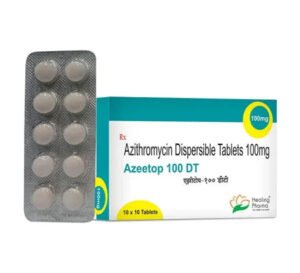
Azeetop 250mg (Azithromycin): Overview
Azeetop 250mg is an azithromycin tablet containing 250 mg of the active ingredient. It is a prescription macrolide antibiotic used to treat certain infections caused by susceptible bacteria. The 250mg strength may be selected as part of a clinician-directed treatment plan, depending on the infection, the patient’s health, and other medicines being used.
Azithromycin does not treat viral illnesses such as colds or influenza. Pack options listed for this product are 30, 60, 100, 200, and 300 tablets.
Uses of Azeetop 250mg (Azithromycin)
Azithromycin works by interfering with bacterial protein production, which stops susceptible bacteria from growing and multiplying. It should be used only for infections for which an antibiotic is appropriate and prescribed.
- Some infections of the throat, tonsils, sinuses, ears, or lungs
- Certain bacterial chest infections, including some cases of bronchitis or pneumonia
- Selected skin and soft-tissue infections
- Specific sexually transmitted bacterial infections when azithromycin is considered suitable
- Other susceptible bacterial infections identified by a healthcare professional
How to Take Azeetop 250mg (Azithromycin)
Take Azeetop 250mg exactly as directed by your doctor or pharmacist. The appropriate amount, timing, and treatment duration depend on the infection and your medical history; do not alter the regimen, take extra tablets, or stop early unless a healthcare professional tells you to do so. Swallow the tablet with water and try to take each dose consistently. If you miss a dose, ask a pharmacist or doctor what to do rather than doubling the next dose.
Complete the prescribed course even if symptoms improve, unless your prescriber advises otherwise. Antibiotics should not be shared with another person or saved for a future illness. If vomiting occurs soon after taking a tablet, contact a healthcare professional for specific guidance.
Strengths available
- Azeetop 250mg (Azithromycin)
- Azeetop 500mg (Azithromycin)
- Azeetop 1gm (Azithromycin)
Possible Side Effects
- Nausea, vomiting, loose stools, or diarrhea
- Stomach pain, indigestion, or abdominal discomfort
- Headache or dizziness
- Temporary changes in taste or reduced appetite
- Skin rash or itching
Seek urgent medical attention for facial or throat swelling, breathing difficulty, blistering or peeling skin, fainting, a fast or irregular heartbeat, or severe or persistent diarrhea, particularly if it contains blood or mucus. Serious liver problems and allergic reactions are uncommon but require prompt assessment.
Precautions & Warnings
- Do not use azithromycin if you have had a serious allergy to azithromycin, erythromycin, another macrolide, or a related antibiotic.
- Tell your prescriber about liver disease, heart rhythm problems, a history of prolonged QT interval, or low potassium or magnesium levels.
- Provide a complete list of medicines and supplements. Some drugs can affect heart rhythm or interact with azithromycin, including certain antiarrhythmics and other prescription treatments.
- Contact a healthcare professional about severe, ongoing, or bloody diarrhea during treatment or afterward; antibiotic-associated colitis can occur.
- Ask for medical guidance if symptoms fail to improve, worsen, or return after treatment. The infection may require reassessment rather than a higher strength.
- Tell your doctor if you are pregnant, planning pregnancy, or breastfeeding before using this medicine.
Storage
Keep Azeetop 250mg in its original packaging, protected from excess heat and moisture, and out of children’s reach. Follow the storage directions on the package and do not use tablets after the expiration date.
Frequently Asked Questions about Azeetop 250mg (Azithromycin)
What does the 250mg strength of Azeetop contain?
Each Azeetop 250mg tablet contains 250 milligrams of azithromycin. This amount describes the active ingredient in one tablet; it does not determine the correct treatment by itself. Doctors choose the strength and overall regimen according to the infection, patient factors, and relevant medicines, so the 250mg tablet should be used only as prescribed.
Can Azeetop 250mg treat a cold or the flu?
No. Colds and influenza are usually caused by viruses, while azithromycin is an antibiotic for certain bacterial infections. Taking Azeetop for a viral illness will not make it resolve faster and may expose you to unnecessary side effects or contribute to antibiotic resistance. A clinician should confirm that a bacterial infection is suspected before treatment.
Why might a doctor prescribe the 250mg tablet instead of a stronger tablet?
The tablet strength is selected to fit an individual treatment plan; a larger strength is not automatically more effective or safer. A prescriber may use 250mg tablets because of the intended regimen, the infection being treated, other medicines, or patient-specific considerations. Do not substitute Azeetop 500mg or 1gm without professional instructions.
What should I do if diarrhea develops while taking Azeetop 250mg?
Mild loose stools can occur with antibiotics, but severe, persistent, watery, or bloody diarrhea needs prompt medical advice, even if it begins after the course ends. Do not self-treat significant diarrhea with an antidiarrheal medicine without checking first. Contact your doctor or pharmacist so the symptoms can be assessed and appropriate care arranged.
Can Azeetop 250mg affect heart rhythm?
Azithromycin can rarely affect the heart’s electrical rhythm, with greater concern in people who have QT prolongation, rhythm disorders, low potassium or magnesium, or medicines that produce similar effects. Tell your prescriber about these conditions and all current medicines. Seek urgent help for fainting, severe dizziness, or a noticeably rapid or irregular heartbeat.
Disclaimer: This information is for educational purposes only and is not a substitute for professional medical advice. Always consult your doctor or pharmacist before starting any medication.


Reviews
There are no reviews yet.